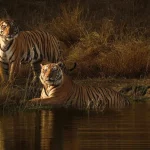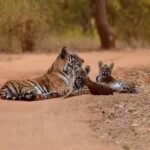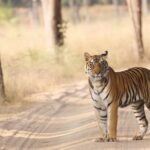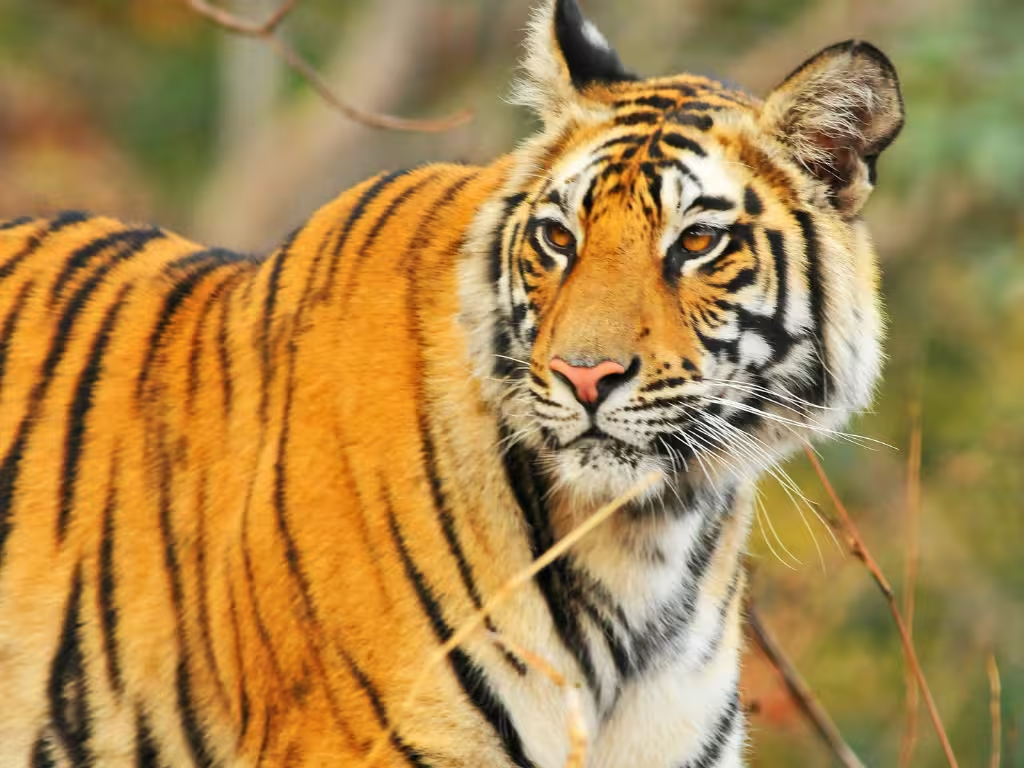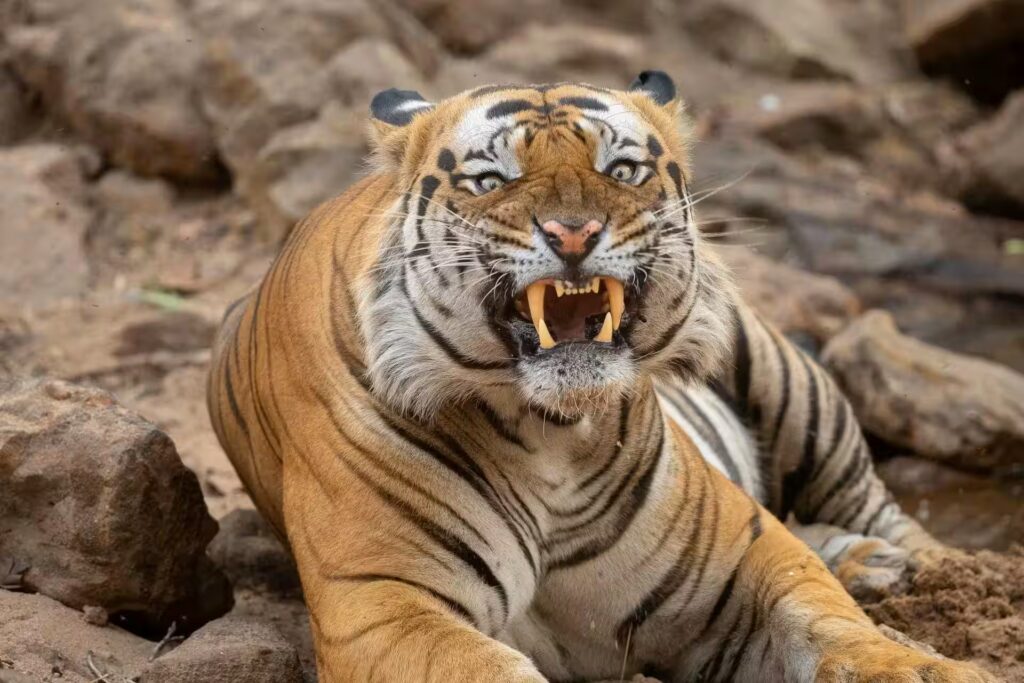
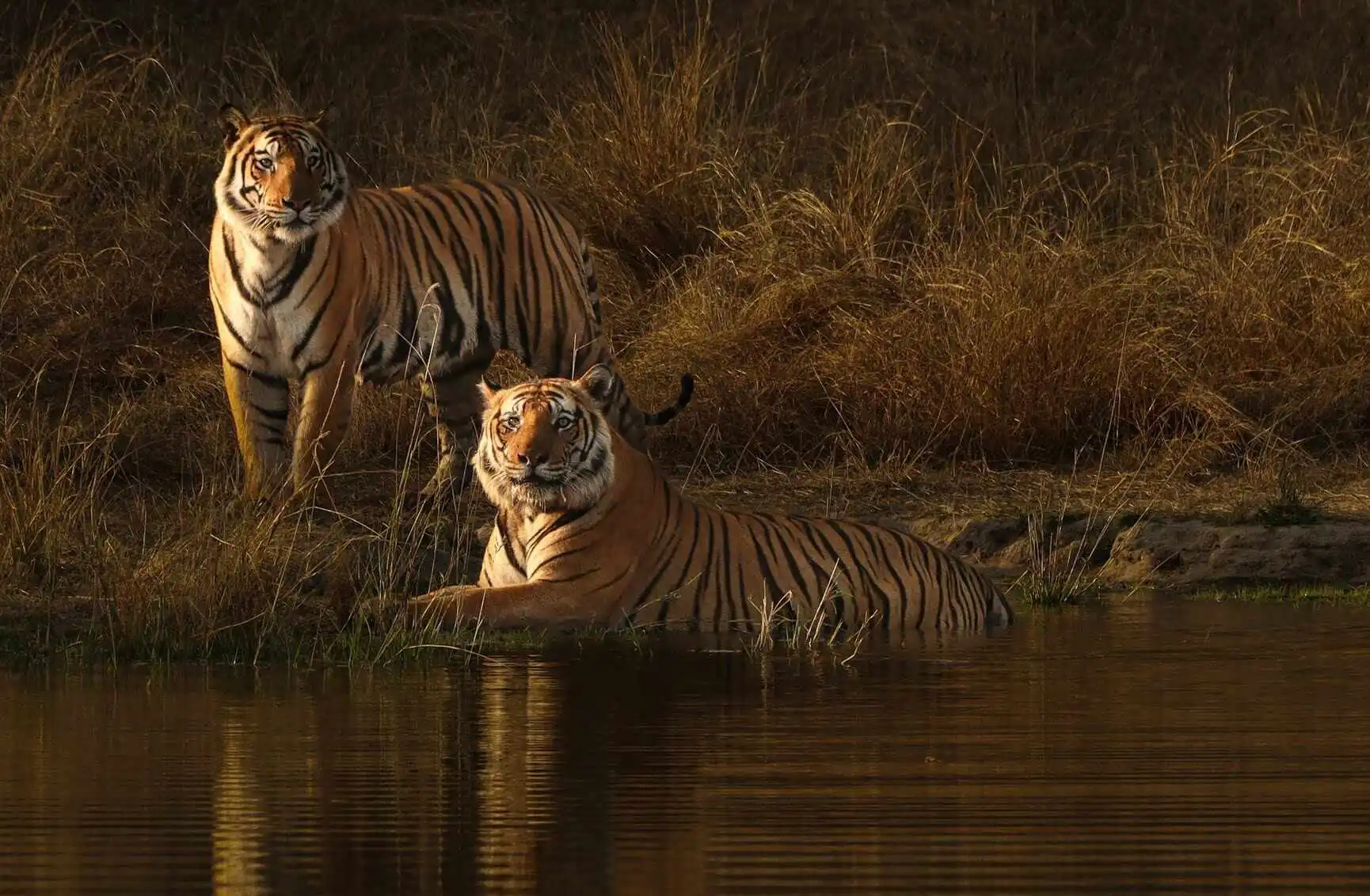
Safari timing shapes how you read the forest in Bandhavgarh National Park. The park holds a high density of Bengal tiger. Animal movement shifts through the day with light and heat. Morning and evening drives show two clear patterns of life. You notice different tracks, calls, and crossings at each hour.
Morning Safari in Bandhavgarh for Active Predators and Fresh Wildlife Movement
Morning safari in Bandhavgarh often brings you close to active predators. The air feels cool after night, and the forest holds quiet movement. Safaris begin around 5:30 AM to 6:00 AM, based on the season. Light enters slowly, and shapes form along tracks and grass edges.
Wildlife commonly observed during morning drives includes:
- Wildlife commonly observed during morning drives includes:
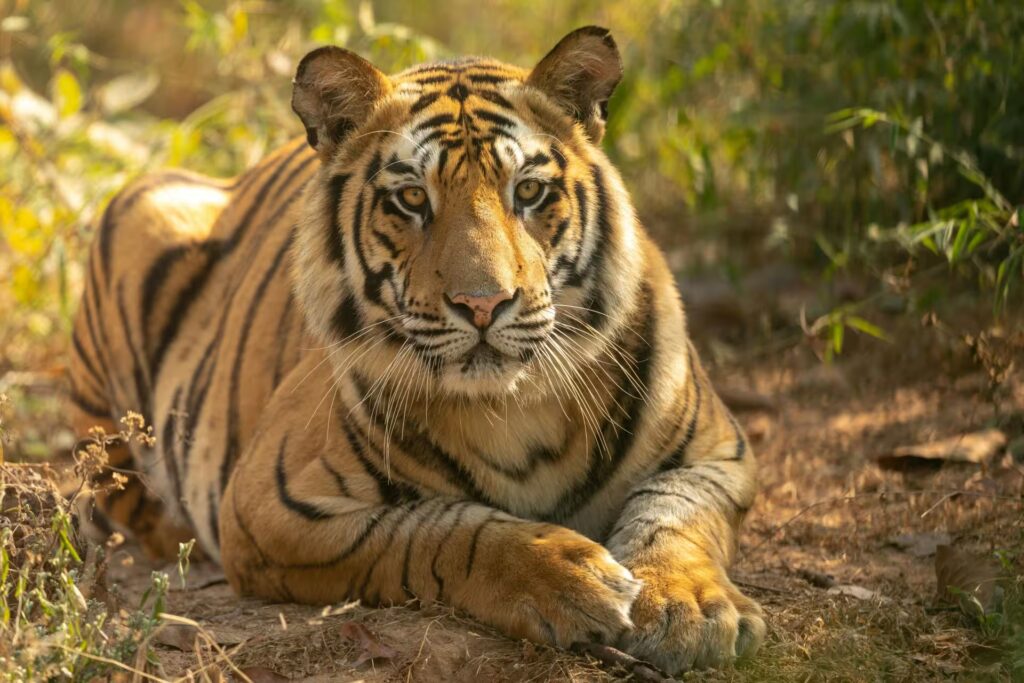
- Bengal tiger walking forest tracks after night patrol
- Indian leopard moving back toward rocky hills before the sun rises higher
- Chital grazing in open ground and watching for sudden movement
- Sambar deer feeding near water and shaded edges
- Wild boar turning soil along forest margins
Early drives reveal fresh pugmarks pressed into dust. You may hear alarm calls from deer in the still air. Guides read these signs and follow lines of movement through the forest.
Evening Safari in Bandhavgarh for Golden Light and Calm Forest Scenes
Evening safari brings a slower pace across the same ground. Light softens and spreads across grass and stone. Afternoon drives begin around 2:30 PM to 3:00 PM and continue until sunset. Heat drops, and animals return to open areas.
Visitors often observe:
- Gaur herds stepping out from dense cover
- Hanuman langur settling on tall trees and watching the ground below
- Sloth bear moving across rocky slopes in search of termites
- Nilgai feeding in open grassland
Sunset light reaches places like Chakradhara Meadow. Long shadows stretch across the meadow, and shapes stand out against the ground.
Wildlife Behavior Changes Between Morning and Evening in Bandhavgarh
Animal activity follows the daily cycle of temperature and light. Early morning holds the last stretch of night movement. Predators still patrol tracks and edges at this time. The heat builds later, and most animals reduce movement.
Evening brings a return to feeding and slow travel. Herbivores such as Chital and Sambar deer move into open ground again.
Bird activity shifts across the same cycle.
Morning safaris often include:
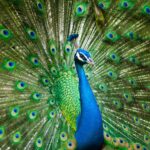
- Indian peafowl calling from clearings
- Crested serpent eagle perched high and facing the rising light
- Indian roller flying low over tracks in search of insects
Evening hours grow quieter as birds return to roost.
Lighting Differences Between Morning and Evening Safari for Photography
Light changes shape and color through the day in Bandhavgarh. Morning light stays soft and cool during the first hour. Winter mornings may hold mist across grass and water.
Morning photography benefits include:
- Soft light that suits close wildlife portraits
- Mist lying low across open ground
- Clear movement in the early hours
Evening light turns warm as the sun drops.
Evening photography benefits include:
- Golden light across forest tracks
- Long shadows that define shape and distance
- Silhouettes of trees and animals at sunset
Rocky slopes and open meadows catch this light and hold strong contrast.
Safari Timings and Entry Rules in Bandhavgarh National Park
Safari timings shift through the year with daylight hours.
Typical schedule:
Morning Safari
- Entry around 5:30 AM to 6:00 AM
- Exit around 10:30 AM to 11:00 AM
Evening Safari
- Entry around 2:30 PM to 3:00 PM
- Exit around 6:00 PM
Important visitor information:
- Safaris run only with registered park vehicles
- Permits must be booked through the Madhya Pradesh Forest Department
- A jeep safari costs about INR 6,000 to INR 8,000 per vehicle
- Each jeep carries six visitors with a guide and driver
The park has multiple zones, and sightings vary with each zone
Why Many Wildlife Travelers Book Both Safari Timings in Bandhavgarh
Many visitors choose both safari timings to read the forest fully. The land shifts in sound and movement between sunrise and sunset. No single drive shows all patterns.
Visitors near Tala Gate, Magadhi Gate, and Khitauli Gate often plan several drives. They spread these drives across a few days.
This approach allows you to see:
- Early predator movement in cool hours
- Herbivores feeding in evening light
- Bird activity at first light
- Changes in ground, light, and distance across the day
Most wildlife photographers plan four to six safaris here. They return to the same tracks and watch for change. Each drive adds another layer to what the forest reveals.